🦸 Grade 7 Math (NJ) · session 3 of 48 · 60 minutes · 🎁 free with an account

Probability, experiments and odds

Mission 3 opens the probability and data unit. Captain Calc's lab has a prize machine: how likely is each prize, what really happens when we test it, and what do the odds on its sign mean?

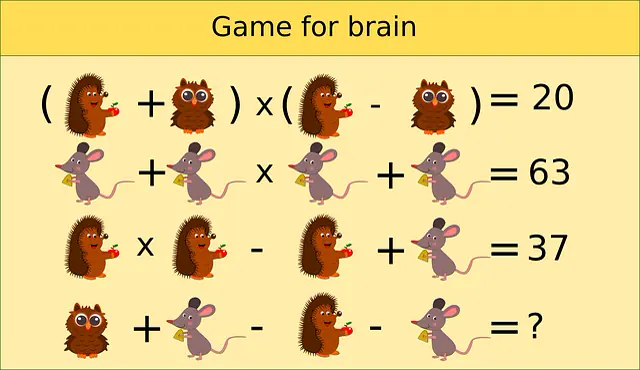
A picture maths puzzle with animals standing for numbers
Illustration: simonjozsef / Pixabay

A complete lesson · 60 minutes

Teach it, see it, practise it, all on this page.

Open this page with your learner and work down it, or press Teach this lesson to go through it one step at a time on a big screen. Every section has something to do.

  1. Mental Maths Arcade8 min
  2. Recall game3 min
  3. Probability from 0 to 19 min
  4. Experiments10 min
  5. Odds8 min
  6. Probability models7 min
  7. Level 3 · Advanced5 min
  8. Level 4 · NJSLA challenge3 min
  9. Level 5 · Real-world modelling4 min
  10. Exit ticket3 min

By the end you can

  • Describe likelihood with a number from 0 to 1, and find P(event) = favourable ÷ possible
  • Run an experiment, find the experimental probability and compare it with the theory
  • Find odds in favour and against, and convert between odds and probability
  • Build and test a probability model, and use it to predict

Before you start

  • Fractions, decimals and percents
  • Simplifying fractions and ratios

Have ready

  • This page (the bag simulator is on screen)
  • A coin and a dice, if you have them
  • A notebook for tally tables

Grade 7 · ages 12 to 13 · NJSLS-M 2023 · NJSLA Grade 7

Warm-up · think first

Recall game: simplify 6/24, write 3/5 as a percent, and solve 2x − 7 ≥ 3.

Show the answer

1/4, 60% and x ≥ 5.

Teacher tip: All three skills appear today: simplifying fractions, percents, and (from Mission 2) inequalities.

🎬 Warm-up mission More warm-ups for every class →

🎮 Mental Maths Arcade · 7 rounds

Play with Captain Calc

Eight minutes in Captain Calc's Superhero lab. Work it out in your head, say why, then reveal. Accuracy first, speed second.

  1. Number Ninja: 3/8 + 1/4 = ?
    Answer: 5/8: 1/4 = 2/8, and 3/8 + 2/8 = 5/8.
  2. Odd one out: which one is NOT the same amount as the others? (1/4 · 25% · 0.4 · 2/8)
    Answer: 0.4: it is 2/5. The other three are all one quarter.
  3. Estimate: a fair coin is flipped 50 times. About how many heads?
    Answer: 25, half of 50. Real results wander a little: 22 or 28 would not be surprising.
  4. A probability is greater than 1. (Always · Sometimes · Never)
    Answer: Never — Never: the most likely an event can be is certain, and certain is 1.
  5. Would you rather win when a dice shows a 6, or when a coin shows heads? (A 6 on the dice · Heads on the coin)
    Answer: Heads: 1/2 is three times as likely as 1/6.
  6. Find the Mistake (from Mission 2): Zoe says −4(x − 2) = −4x − 8.
    Answer: No: −4 × (−2) = +8, so it is −4x + 8.
  7. Boss Battle: a bag has 12 red and blue counters, and P(red) = 1/3. How many are blue?
    Answer: 8: one third of 12 is 4 red, so 12 − 4 = 8 blue.

Three levels, like a real engineer

Use it. Tweak it. Build it.

First use what the lesson shows exactly as it is, then change one key thing and see what happens, then make your own.

  1. 🔒

    Level 1 · Use it

    Run The Spinner

    Spin the lesson's 8-section spinner (3 red, 2 blue, 2 green, 1 gold) 60 times and tally each colour. Then write P(red) as a fraction and say what you notice.

  2. 🔧

    Level 2 · Tweak it

    Change The Spins

    In the same spinner experiment, change 60 spins to 200 spins. Predict how many reds you expect, then run it and compare your prediction with what really happened.

  3. 🛠️

    Level 3 · Build it

    Build Your Own Bag

    Make your own bag of counters or spinner with different colours. Write the theoretical probability for one colour, run 50 trials, then find the experimental probability and odds in favour.

Part 1 of 4 · learn, see, practise

Probability from 0 to 1

Captain Calc's prize machine has a spinner. Before anyone spins, the heroes say how likely each prize is, from impossible (0) to certain (1).

An experiment is an action with uncertain results, like spinning a spinner. The outcomes are its possible results. An event is one outcome or a group of them, like 'landing on red'.

When all the outcomes are equally likely, the theoretical probability is P(event) = number of favourable outcomes ÷ number of possible outcomes. For a fair dice, P(even) = 3/6 = 1/2.

A probability is a number from 0 to 1: 0 is impossible, 1/2 is as likely as not, and 1 is certain. It can be written as a fraction, a decimal or a percent: 1/4 = 0.25 = 25%.

The complement of an event is everything else, and P(not A) = 1 − P(A). On a fair dice, P(not a 6) = 1 − 1/6 = 5/6.

Remember!
  • P(event) = favourable ÷ possible, when the outcomes are equally likely.
  • Every probability is from 0 to 1, and P(not A) = 1 − P(A).
📝 Notes

Count equal sections, not colours: a spinner with 8 equal sections, 3 of them red, gives P(red) = 3/8 even though it has only 4 colours.

Likelihood words: impossible (0), unlikely (less than 1/2), as likely as not (1/2), likely (more than 1/2), certain (1).

Example 1

This spinner has 8 equal sections: 3 red, 2 blue, 2 green and 1 gold. Find P(red), P(blue or green) and P(not gold).

RedBlueRedGreenRedBlueGoldGreen
  1. 8 equal sections, so 8 possible outcomes.
  2. P(red) = 3/8.
  3. Blue or green: 2 + 2 = 4 sections, so 4/8 = 1/2.
  4. P(not gold) = 1 − 1/8 = 7/8.

Answer: 3/8, 1/2 and 7/8

Practise it

Start with the warm-up and go as far as you can. The stretch questions are meant to be hard.

Warm-up

Warm-up

Core

Core

Core

Stretch 🔥

Answers (for the teacher)
  1. 1/6
  2. 1/3
  3. 1/2
  4. 5/6
  5. 2/11
  6. 0.25

🎁 Free for a year

Make a free account to open the rest of this lesson

Every new account opens every lesson of every course free for a whole year: no payment, no card, nothing to cancel.

Unlocking the rest of this lesson gives you:

  • Part 2: Experiments: what really happens, with practice at three levels
  • Part 3: Odds in favour and odds against, with practice at three levels
  • Part 4: Probability models: fair or weighted?, with practice at three levels
  • Class activity 1: Level 3 · Advanced: mixed probability
  • Class activity 2: Level 4 · NJSLA challenge: reason it out
  • Class activity 3: Level 5 · Real-world modelling: the school fair spinner
  • A 8-question quiz
  • After-class project: Design a school fair game
  • Homework and a printable practice sheet with answers
  • Teach mode and the minute-by-minute teacher's plan

It takes a minute. Anyone under 13 signs up with a parent. The first 2 lessons of every course, every game and all maths practice stay free.

FAQ

Probability, experiments and odds: questions

Is this in the school order?

Yes. The class moves from equations and inequalities to probability and data next, so this mission prepares the first lessons of that unit.

Which standards are these?

New Jersey NJSLS-M 7.SP.C.5 (probability from 0 to 1), 7.SP.C.6 (experimental probability and prediction) and 7.SP.C.7a and 7.SP.C.7b (uniform and non-uniform probability models). Odds in favour and against are added because the school unit includes them.

What are odds?

Odds compare favourable outcomes with unfavourable ones. Odds of 1 : 4 mean one way to win for every four ways to lose, which is a probability of 1/5.

Start a conversation

Want a teacher to take this class?

Tell us the learner's age and level. A teacher from our network teaches with these lessons; we confirm timing and price first.

  • Tell us the learner’s age or grade and goals
  • We’ll suggest a suitable class or learning path
  • We’ll confirm format, timing and fees with a parent or guardian

For a child’s class, please have a parent or guardian send the enquiry. Avoid sharing passwords or sensitive personal details.

We’ll use your details only to respond to this request.

Chat on WhatsApp
Esc

Try